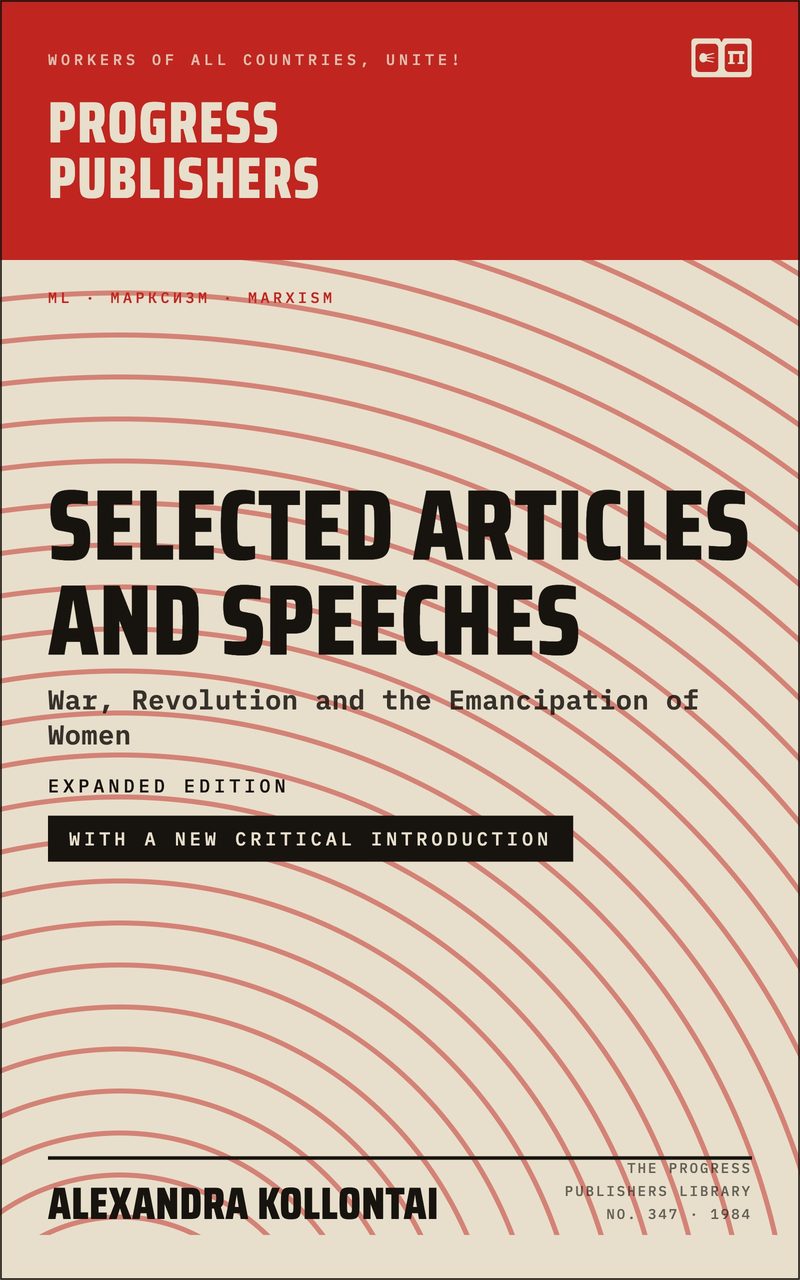
Selected Articles and Speeches
Buy
The chronology at the back of the 1984 edition gives the Workers' Opposition in full. It names Kollontai's pamphlet, reports Lenin's criticism of it at the Tenth Congress, calls her position anti-party, and records that she afterwards reconsidered and gave up the argument. What that volume did not contain was one word of the pamphlet itself. The reader was handed the verdict and denied the case.
Alexandra Kollontai was the only woman in the first Bolshevik government and the first woman in modern history to head a diplomatic mission. For forty years she argued one thing without much varying it: that the emancipation of women was a material question or it was nothing, rooted in property and in the unpaid labour of the household, and untouched by legal equality on its own.
The collection's heart is the anti-war writing of 1912 to 1917, made when the Second International voted the war credits and she was among the minority who did not bend. Around it stand the international socialist women's conferences from 1907, Lenin at Smolny in October 1917, and the first Soviet legislation on maternity and women's work.
This expanded edition restores the two things the 1984 selection could not accommodate. The Workers' Opposition in Russia is printed complete, in the translation the Industrial Workers of the World published in Chicago in 1921 while the argument was still live. Make Way for Winged Eros, her 1923 letter to working youth on love and the new morality, appears in a new English translation prepared for this edition.
Progress Publishers, 1984. Translated by Cynthia Carlile.
New critical introduction by Dmitry Chasovennikov.
| Series | The Progress Publishers Library |
| First published | 1984 |
| ISBN | 978-5-01-900336-5 |
| Pages | 339 |
| Language | English |
| Subject | Marxism |
| Introduction By | Dmitry Chasovennikov |
| Translator | Cynthia Carlile |