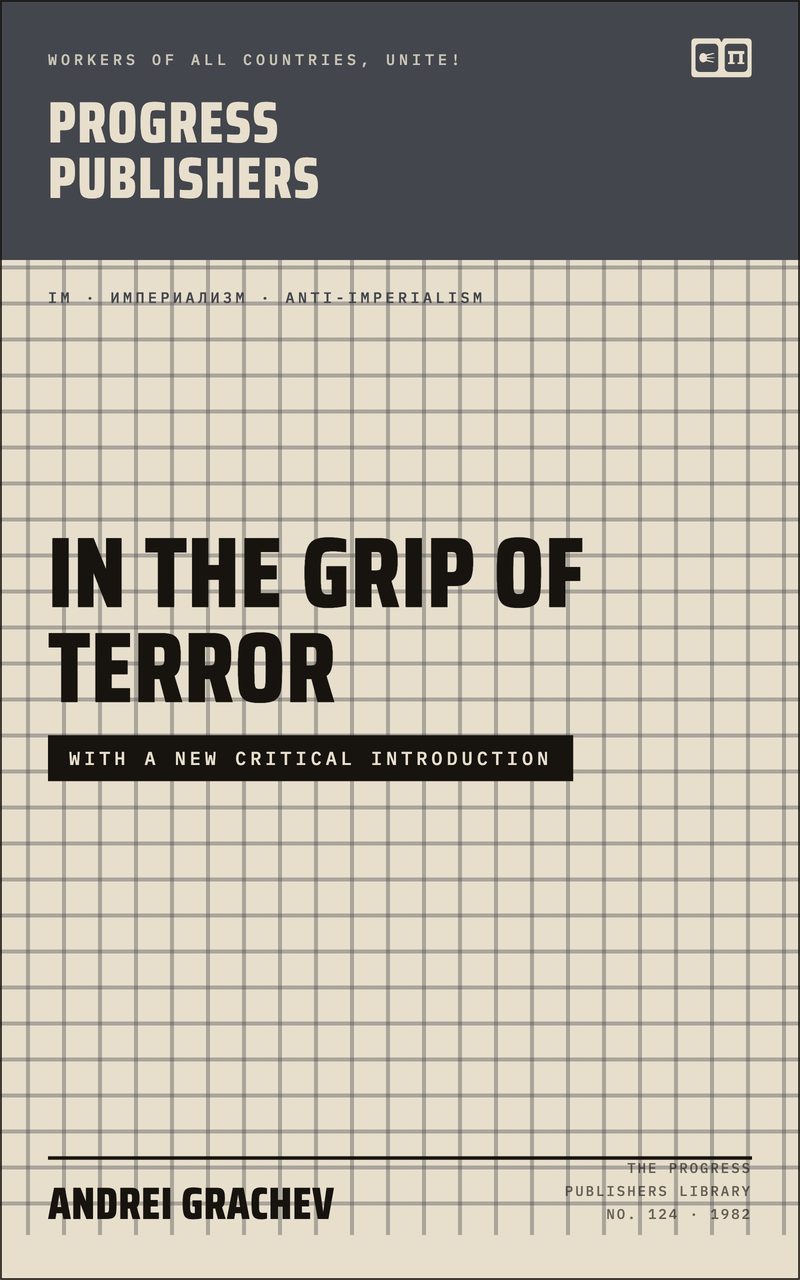
In the Grip of Terror
Buy
The critical introduction
Written for this edition and published free in Progress Quarterly, Volume VII, Number 2.
Read it the whole numberMost books of this kind have to be argued with line by line. This one is largely correct, and that is what makes it worth reading closely.
Its subject is single and precise. In January 1981 the incoming Reagan administration announced that international terrorism would replace human rights as the central concern of American foreign policy, and that the Soviet Union was behind it; Alexander Haig said so within days of taking office, and Claire Sterling's The Terror Network appeared two months later to supply the evidence. This is Moscow's answer, arguing that the charge is false, that the campaign is a cover for intervention, and that the terrorism actually being committed is overwhelmingly the work of the far right and of states allied to Washington.
On those counts it was right, and right at the time on evidence any reader could check. Grachev makes the case largely by quoting Americans against themselves.
The author is worth knowing about. Andrei Grachev, born in Moscow in 1941 and a graduate of MGIMO, worked in the International Department of the Central Committee from the mid-1970s, rising to deputy head. The readership shows: he quotes L'Humanite, L'Unita, Marchais, Pajetta and Gus Hall far more often than Pravda, and his arguments about the Red Brigades are the arguments the Italian party was making in its own press. This is an export product for the Western left.
Nine years later the same man was Gorbachev's press secretary, speaking for the Soviet presidency in its final weeks.
New critical introduction by Dmitry Chasovennikov.
| Series | The Progress Publishers Library |
| First published | 1982 |
| ISBN | 978-5-01-900066-1 |
| Pages | 150 |
| Language | English |
| Subject | Anti-Imperialism |
| Introduction By | Dmitry Chasovennikov |