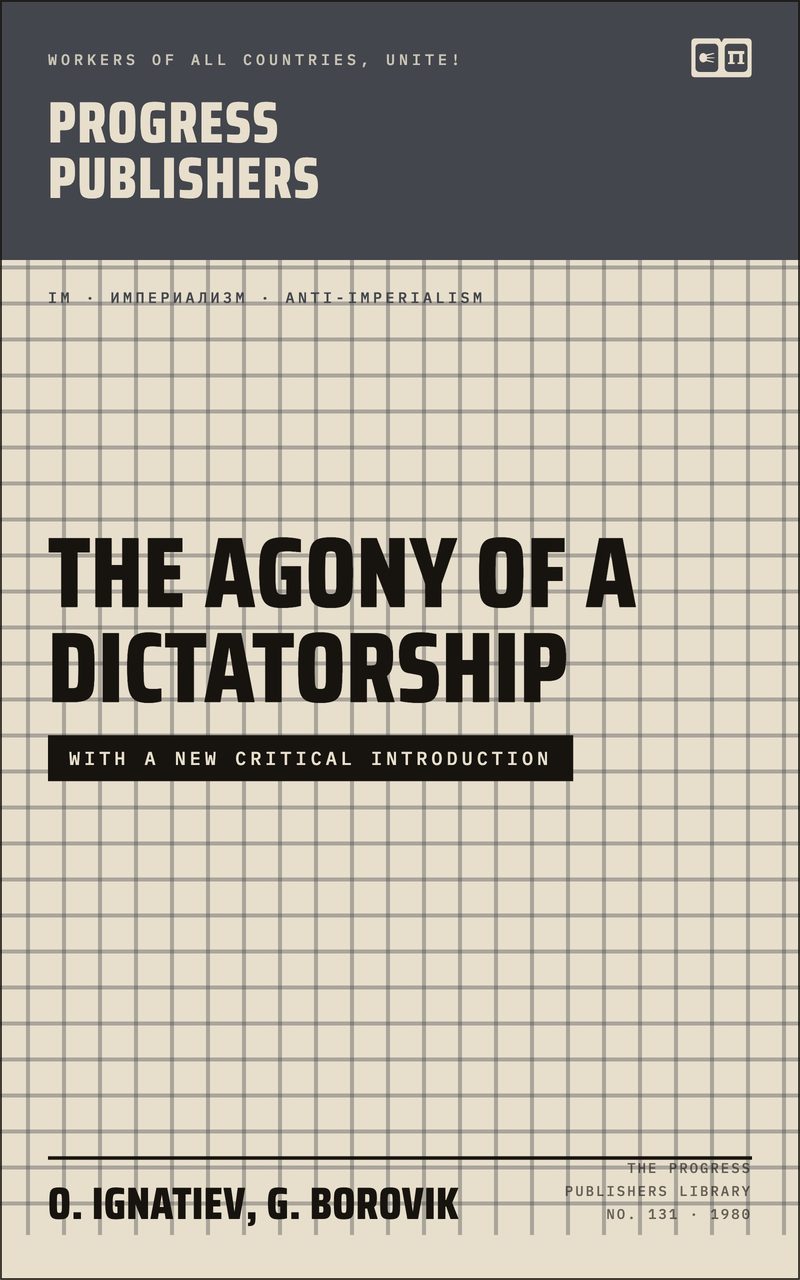
The Agony of a Dictatorship
Buy
The critical introduction
Written for this edition and published free in Progress Quarterly, Volume VI, Number 2.
Read it the whole numberAt twenty past noon on 22 August 1978, two light-green trucks pulled up at the side entrances of the National Palace in Managua. Twenty-five Sandinistas in stolen National Guard uniforms seized a building holding some two thousand people, including most of the Nicaraguan Congress, and held it for two days until Somoza gave in to their demands.
The book opens on that raid because its two authors watched the regime from close range in exactly those months. Oleg Ignatiev was the Pravda correspondent who also wrote Secret Weapon in Africa; Genrikh Borovik was a reporter with a novelist's eye. Both were in Central America some six months before the dictatorship fell.
It is two books bound as one. Ignatiev's chronicle traces the dynasty's rise and fall with the documents laid end to end, running to the morning of 19 July 1979, when the first foreign newsmen landed at the newly captured Managua airport and saw the red-and-black flag over Somoza's abandoned bunker on Tiscapa Hill. Borovik's half is literary reportage from a guerrilla hideout and a refugee camp, dated Central America to Moscow, October 1978 to January 1979.
It is not theory and does not pretend to be. It is war journalism with a thesis, and the thesis is a true one: that the tyranny falling in Nicaragua had been built, armed, trained and protected for forty-five years by the United States. Much of what it documents under that heading is real, and it was written in the heat of events and published within a year of the victory.
Translated by Arthur Shkarovsky.
New critical introduction by Dmitry Chasovennikov.
| Series | The Progress Publishers Library |
| First published | 1980 |
| ISBN | 978-5-01-900101-9 |
| Pages | 158 |
| Language | English |
| Subject | Anti-Imperialism |
| Introduction By | Dmitry Chasovennikov |
| Translator | Arthur Shkarovsky |