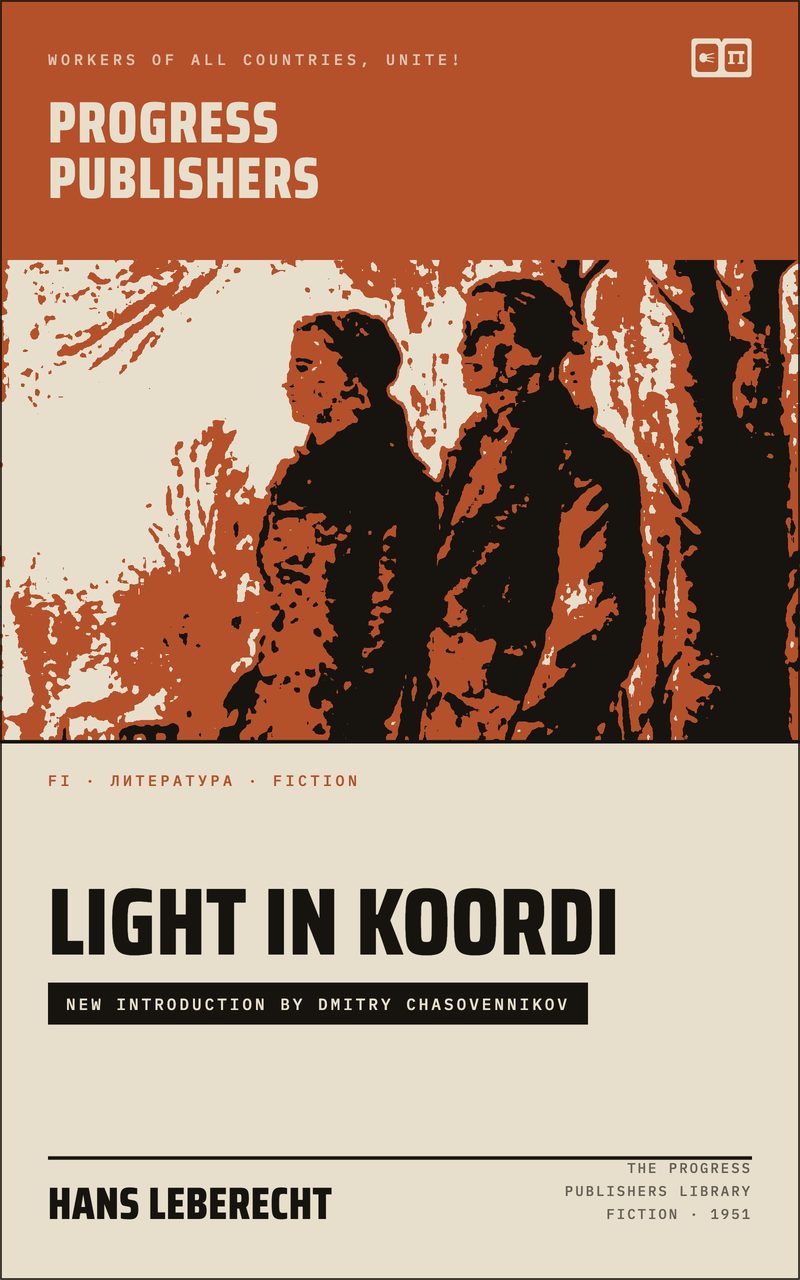
Light in Koordi
Buy
The last page is a bonfire on the edge of Snake Swamp and a twenty-day-old baby held up to see it: "Look, the fire's burning, the light." It is a well-made ending to a well-made novel about the collectivisation of one Estonian village, by argument, example, a machine cooperative, a drained swamp and a single court case.
The book won the Stalin Prize in 1948 and was printed in English in Moscow in 1951. Between those dates lies March 1949, when Operation Priboi deported some twenty thousand Estonians to Siberia in four days, and the share of Estonian farms in collective farms went from 8 per cent to 64 per cent in a month.
Leberecht, a Red Army reconnaissance soldier from an Estonian family, is a better writer than the scheme needs: good on farmhouse quarrels, on snow, on a cow changing hands, and on a blind man lighting a lamp he cannot see. The new introduction reads the novel's single use of "intensification of the class struggle", its twelve footnotes and its categories of enemy - kulak, bandit, "forest brethren" - against what happened in the Estonian countryside.
Foreign Languages Publishing House, Moscow, 1951, in the Library of Selected Soviet Literature. Translation edited by Leonard Stoklitsky.
New critical introduction by Dmitry Chasovennikov.
| Series | The Progress Publishers Library |
| First published | 1951 |
| ISBN | 978-5-01-015040-2 |
| Pages | 599 |
| Language | English |
| Subject | Fiction |
| Introduction By | Dmitry Chasovennikov |